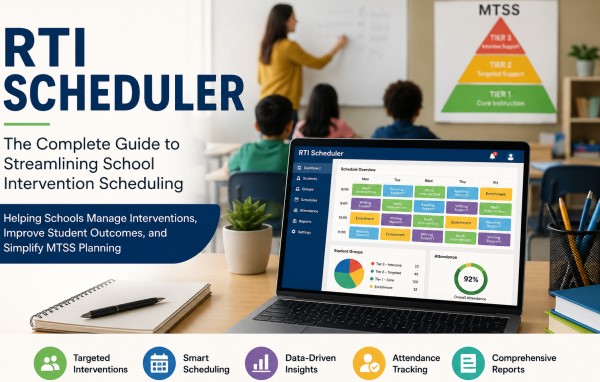
In today’s education system, schools are under increasing pressure to ensure that every student receives the right level of support at the right time. Whether it is academic intervention, enrichment, or behaviour support, managing these activities efficiently is a complex task. This is where the concept of RTI Scheduler becomes essential. It is designed to simplify how schools organise Response to Intervention (RTI) and Multi-Tiered System of Supports (MTSS) programmes, ensuring that no student is left behind.
RTI Scheduler is more than just a timetable tool. It is a structured approach that allows educators to assign students to targeted intervention groups, track progress, and make data-driven decisions. In this article, we will explore how RTI Scheduler works, its features, benefits, and why it has become a vital tool in modern education systems.
What is RTI Scheduler?
RTI Scheduler is a digital system used by schools to manage intervention periods, enrichment classes, and student support programmes. It helps administrators and teachers organise students into appropriate learning groups based on their academic needs, assessment results, and behavioural data.
Instead of manually creating schedules, which can be time-consuming and prone to errors, RTI Scheduler automates the process. It ensures that students are placed into the correct sessions and that teachers are assigned efficiently based on their availability and expertise.
At its core, RTI Scheduler supports the RTI framework, which focuses on early identification of learning difficulties and providing timely support to improve student achievement.
Importance of RTI Scheduler in Education
Schools today operate in highly dynamic environments. Teachers are required to manage large classrooms, diverse learning needs, and strict curriculum demands. Without a structured scheduling system, intervention programmes can easily become disorganised.
RTI Scheduler plays a critical role by ensuring:
- Students receive timely academic support
- Teachers are not overburdened with conflicting schedules
- Intervention groups remain balanced and effective
- Data is used to guide educational decisions
This structured approach improves overall school efficiency and enhances student performance.
How RTI Scheduler Works
RTI Scheduler works by integrating student data, teacher availability, and school timetable structures. The process typically involves several key steps:
Student Data Input
Schools first upload student information, including assessment scores, behaviour records, and academic performance. This data is essential for grouping students into appropriate intervention levels.
Group Formation
Based on the data, students are grouped into categories such as high support, moderate support, or enrichment. These groups are aligned with the RTI framework tiers.
Teacher Allocation
Teachers are assigned to groups based on their expertise and availability. RTI Scheduler ensures that workload distribution is balanced.
Timetable Creation
The system automatically generates a schedule that fits within the school day. It avoids conflicts and ensures that students attend all necessary sessions.
Progress Tracking
Once the schedule is in place, schools can monitor attendance, progress, and outcomes. Adjustments can be made as needed to improve effectiveness.
Key Features of RTI Scheduler
RTI Scheduler offers a wide range of features that make it a powerful tool for schools.
Automated Scheduling
One of the most important features is automation. Schools no longer need to manually arrange intervention sessions. The system does it in minutes.
Flexible Grouping
Students can be grouped dynamically based on changing academic needs. This ensures that interventions remain relevant throughout the year.
Data Integration
RTI Scheduler integrates with school information systems, allowing real-time access to student performance data.
Attendance Monitoring
Teachers can easily record attendance, helping schools track student engagement in intervention programmes.
Reporting Tools
The system generates detailed reports that help administrators analyse progress and identify gaps in learning.
Resource Management
RTI Scheduler ensures efficient use of teaching staff and classroom space, reducing scheduling conflicts.
Benefits of Using RTI Scheduler
Implementing RTI Scheduler in schools offers numerous benefits for teachers, students, and administrators.
Improved Student Outcomes
By ensuring that students receive targeted support, RTI Scheduler helps improve academic performance and reduces learning gaps.
Time Efficiency
Manual scheduling can take hours or even days. RTI Scheduler reduces this to minutes, allowing staff to focus on teaching rather than administration.
Better Organisation
Schools can maintain a structured and organised approach to intervention programmes, reducing confusion and overlap.
Data-Driven Decisions
Educators can make informed decisions based on accurate data and progress tracking.
Reduced Teacher Workload
Teachers benefit from balanced schedules and clear instructions, reducing stress and improving productivity.
RTI Scheduler and MTSS Framework
RTI Scheduler is closely linked with the MTSS (Multi-Tiered System of Supports) framework. MTSS is a comprehensive approach that provides academic and behavioural support at different levels of intensity.
Tier 1 Support
This includes general classroom instruction for all students.
Tier 2 Support
Targeted intervention is provided for students who need additional help.
Tier 3 Support
Intensive, individualised support is given to students with significant learning challenges.
RTI Scheduler ensures that students are correctly placed within these tiers and receive appropriate support at the right time.
Challenges Solved by RTI Scheduler
Before the introduction of scheduling systems, schools faced several challenges:
- Conflicting timetables between teachers and students
- Inefficient use of intervention time
- Difficulty tracking student progress
- Lack of coordination between departments
RTI Scheduler addresses these issues by centralising all scheduling functions into one platform, reducing administrative burden and improving communication.
Why Schools Are Adopting RTI Scheduler
The increasing demand for personalised learning has made RTI Scheduler an essential tool in education. Schools are recognising the importance of using technology to support intervention programmes.
Key reasons for adoption include:
- Growing student diversity in classrooms
- Increased accountability in education systems
- Need for measurable academic improvement
- Pressure to optimise school resources
RTI Scheduler provides a practical solution to these challenges.
Best Practices for Implementing RTI Scheduler
To maximise the benefits of RTI Scheduler, schools should follow certain best practices:
Train Staff Properly
Teachers and administrators should be trained on how to use the system effectively.
Maintain Accurate Data
The system relies heavily on student data, so accuracy is essential.
Review Schedules Regularly
Intervention needs may change, so schedules should be updated periodically.
Encourage Collaboration
Teachers should work together to ensure that intervention strategies are effective.
Future of RTI Scheduler in Education
As educational technology continues to evolve, RTI Scheduler systems are expected to become even more advanced. Future developments may include artificial intelligence-based scheduling, predictive analytics for student performance, and deeper integration with digital learning platforms.
This evolution will make intervention planning even more precise and efficient, ensuring that every student receives personalised educational support.
Conclusion
RTI Scheduler has transformed the way schools manage intervention and enrichment programmes. By automating scheduling, improving data usage, and enhancing coordination, it helps schools create a more effective learning environment.
In an education system where every minute and every student matters, RTI Scheduler ensures that support is delivered efficiently and accurately. Its role in improving academic outcomes and reducing administrative workload makes it an essential tool for modern schools aiming to achieve excellence in student development.